
Mountain Bike Xtreme
Pixel JoyRacing
4.2640.00 Reviews
- Version
- 2.4
- Installs
- 10.00M
- Age Rating
- Everyone
Screenshots
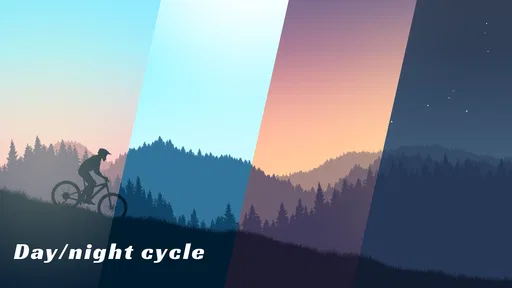
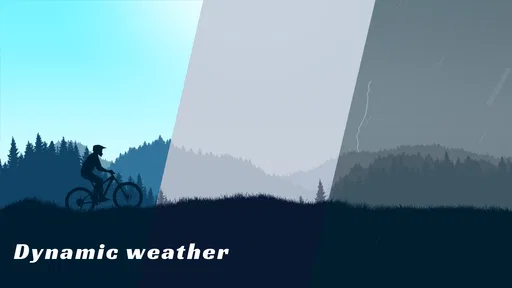
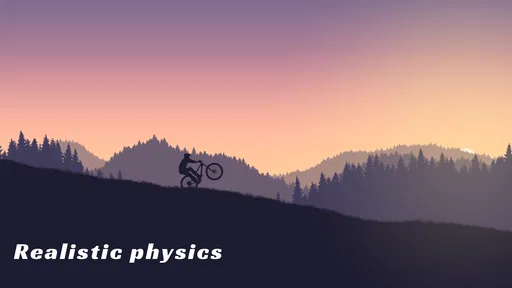
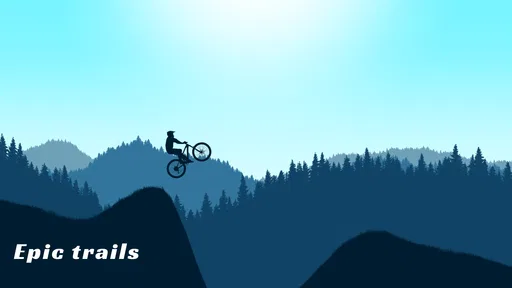
Our Review of Mountain Bike Xtreme
 Analysis by Appyee
I spent time with Mountain Bike Xtreme as a pick-up-and-play racing game, and my first impression was that it wants the bike itself to be the star. Rather than burying the experience under menus or a complicated career structure, it puts the focus on riding through rough mountain routes, reacting to the terrain, and trying to keep control when the trail becomes less forgiving. That makes it easy to understand, but not always easy to master.
Created by Pixel Joy, this free game sits in the racing category and is suitable for Everyone. It has been available since March 31, 2018, and its current version is 2.4. The game runs on devices using Android 5.1 or later, which makes it approachable for people using older compatible phones as well as newer hardware. Its broad appeal is also reflected in its 4.2 average from around 69 thousand ratings and more than 10 million installs.
What interested me most was not simply whether the downhill riding felt entertaining. I wanted to see how comfortably different people could read the action, learn the controls, and play in different surroundings. A game built around timing and balance can be enjoyable for one person and tiring for another, especially when the screen is small, the environment is noisy, or the player needs a slower learning curve.
How the riding experience communicates what to do
I focus here on how Mountain Bike Xtreme makes its riding challenge understandable without spelling out every move. In my experience, the trail and the bike’s response give you clues to work with, so the next section looks at how to turn those cues into a steadier approach rather than relying on guesswork.
Readable action without a heavy learning burden
The basic idea is clear very quickly: guide a mountain bike across uneven landscapes and stay in control. That clarity matters because racing games can sometimes overwhelm a new player with upgrade trees, event menus, vehicle statistics, and several control schemes before the first meaningful race. Here, the mountain trail provides the main context. You can see the slope, the gaps, and the changes in the ground, then make your decisions from what is happening on screen.
I found that the strongest part of the presentation is its immediate visual feedback. The bike’s movement tells me whether I am approaching a landing well or carrying too much rotation. That creates a useful learning loop: attempt a section, notice how the bike responds, and adjust the next run. The game does not need long explanations to make the central challenge understandable.
That simplicity also helps players who prefer to learn by doing rather than reading. Someone who is not comfortable with dense text or complicated instructions can begin experimenting almost at once. The trade-off is that visual simplicity does not automatically mean low difficulty. Once the route demands precise timing, the player still has to interpret motion quickly.
Menus, orientation, and the value of short sessions
Mountain Bike Xtreme works best when I treat it as a focused session rather than a game that needs a long uninterrupted commitment. A short attempt gives me a clear goal: get through a section, improve a landing, or simply reach farther than before. This is useful when I have a few minutes while waiting for an appointment or taking a break, because I do not need to remember a large amount of story context.
The straightforward structure is also helpful for people who become frustrated by navigation-heavy games. There is less mental effort spent deciding where to go next, and more spent on the ride itself. For a player who enjoys visible progress through personal improvement, repeating a difficult trail can feel more rewarding than moving through a large map full of distractions.
Still, repeated attempts can become demanding. The same clarity that makes the game easy to start means the experience places much of its variety on the landscapes and the physics. If you prefer constant unlocks, character development, or a large collection of race types, a more feature-heavy racing game may hold your attention better. This is a focused mountain-bike challenge, not a broad racing package.
Reading the trail is more important than chasing speed
One practical tip changed the way I played: I stopped treating every downhill section as a request to go as fast as possible. The better approach is to read the shape of the next landing and prepare the bike before the jump or drop. Speed can help carry momentum, but it can also make a mistake harder to correct. The game becomes more manageable when I think in terms of setting up the next movement instead of reacting at the last instant.
This is one of the less obvious strengths of the physics. The attractive scenery is not just decoration; it gives the ride a visual rhythm. Hills, gaps, and uneven surfaces naturally encourage me to look ahead. Players who enjoy learning a route through repeated observation will probably get more from it than players who want an arcade racer where pressing forward is usually enough.
Motor demands and control comfort
Because the game is built around bike balance and timing, it asks for repeated touch input and quick corrections. That can feel satisfying when my hands are relaxed and the phone is easy to hold. It can also become tiring during longer sessions, particularly for anyone who finds small, rapid gestures uncomfortable or who has difficulty maintaining a steady grip.
I recommend starting with short runs instead of committing to an extended play period. This is not only a comfort suggestion; it also improves performance. When I play for too long, I tend to make rushed corrections and blame the trail, even though the real problem is that my attention has dropped. Taking a pause helps both physical comfort and accuracy.
Players with limited fine-motor control may find the central challenge demanding, since successful riding depends on controlling the bike at the right moment rather than simply selecting a direction. The game’s accessible age rating should not be confused with a low-input design. A younger player can understand the objective, but may still need practice, patience, or help learning how the bike reacts.
Visual and sensory considerations
The mountain setting gives the game a strong visual identity, and the contrast between the bike and the trail is important for reading what is happening. On a small phone, though, fast movement can make a landing harder to judge. I found it more comfortable to play in good lighting and with the screen held at a stable angle. Those simple changes reduced the need to squint or make last-second guesses.
This is also a game where sensory load can come from speed and motion rather than from complicated information. If rapid scrolling landscapes or repeated crashes make you uncomfortable, shorter sessions are the sensible way to test your tolerance. I would not recommend beginning with a long play session in a moving vehicle or another environment where visual focus is already difficult.
For players who rely heavily on audio cues, the experience may be less comfortable if they expect sound to explain every important event. The trail itself is the main source of information, so I prefer keeping my attention on the screen. That makes the game a better fit for quiet visual play than for someone looking for a racing experience that can be followed mostly through sound.
Playing in everyday situations
A realistic use case is a short break during a commute or between tasks, provided I am sitting somewhere safe and can look steadily at the display. I can make a few attempts, learn one troublesome section, and stop without feeling that I have abandoned a complicated mission. That makes the game more practical than a long-form racing title when my available time is unpredictable.
On the other hand, it is not ideal for every waiting-room situation. If I am standing, carrying something, dealing with glare, or frequently interrupted, the precision required by the bike becomes frustrating. A slower puzzle game would be a better choice in those circumstances. Mountain Bike Xtreme rewards attention, so the convenience of a quick session depends on having a stable moment to play.
It can also work well as a shared casual challenge between friends or family members who want to compare how far they can get. The appeal comes from watching someone adjust to the physics and improve, rather than from a complicated multiplayer structure. For younger players, I would encourage an adult to explain that controlled movement matters more than simply rushing forward.
Where it fits among racing alternatives
Compared with a conventional car racer, this game feels more intimate and more physical. There is no sense that I am managing a full racing team or choosing from a large garage before the fun begins. The bike, the slope, and the next landing are enough to create the challenge. That makes it a good alternative for someone who wants racing built around balance instead of overtaking opponents on a track.
Compared with an endless runner, it gives me more reason to study the terrain. The objective is not merely to survive a constantly advancing screen; I am learning how the bike behaves over distinct changes in the landscape. That extra control can feel rewarding, though it also means mistakes are more personal. I cannot always blame random obstacles when a poor landing follows a bad decision.
Arcade racers with boosts, dramatic collisions, and instant high-speed excitement may be more satisfying for players who want spectacle above all else. Mountain Bike Xtreme is better suited to someone who enjoys the quiet satisfaction of improving technique. Its realistic physics are part of the attraction, but they also create the main barrier: realism can feel unfair until the player understands the timing.
Practical friction and who may want to skip it
The biggest limitation is the possibility of repetition. Once the novelty of the landscapes settles, the game depends on whether I enjoy retrying sections to improve my control. That is a reasonable design choice for a physics-focused game, but it will not suit everyone. If you need a steady stream of new mechanics, social features, or a strong narrative reason to continue, you may outgrow it.
Another point is the difference between being free and being effortless. Since there is no purchase price, it is easy to try without a financial commitment. However, the game still asks for patience. Players who expect to understand every trail immediately may mistake the learning curve for poor handling. I found it more enjoyable after accepting that failed attempts are part of the process.
I would also skip it if your main requirement is a racing game that is comfortable to play without looking closely at the screen. The landscape and bike position carry too much of the useful information. Likewise, anyone seeking a relaxed game with minimal hand movement may prefer a turn-based or slower alternative.
Small habits that make the game easier to enjoy
First, I suggest learning one type of movement at a time. Instead of trying to master speed, rotation, and landing position during the same attempt, focus on what caused the last mistake. Was the bike too fast, tilted incorrectly, or simply late in responding? Separating those questions makes improvement feel practical rather than mysterious.
Second, use the beginning of a run as a calibration period. I pay attention to how much movement is needed for a correction and avoid making large inputs simply because the trail looks dramatic. This is especially useful for new players, children, and anyone who finds precise touch control difficult. A calm opening usually produces a better result than an aggressive one.
Third, match the session to your surroundings. I play seated, keep the phone steady, and avoid trying difficult sections when glare or interruptions make the screen hard to read. This sounds obvious, but it has a direct effect on fairness: a game based on visual timing can feel much harder when the environment is working against it.
Finally, treat progress as improved understanding rather than only distance. Reaching a little farther is satisfying, but recognizing why a landing failed gives the next attempt a purpose. That mindset is particularly helpful for players who become discouraged by retries. The game rewards patience more reliably than it rewards frantic input.
My inclusive verdict
Mountain Bike Xtreme is a focused, free racing game with a clear identity. Pixel Joy has built the experience around mountain trails, visual judgment, and physics that ask the player to learn through practice. Its Everyone rating and simple premise make it easy to recommend as a trial for families and casual players, while its precision requirements mean that not every player will find it comfortable.
I think it supports different abilities best when the player can control the length and conditions of each session. Short attempts, a stable grip, good lighting, and a willingness to learn from mistakes make a noticeable difference. Those are practical ways to reduce friction, though they do not remove the need for repeated touch input or close visual attention.
The game has earned a 4.2 average and passed 10 million installs, which fits my impression that its central idea is easy to understand and broadly appealing. Its current version, 2.4, remains a sensible option for someone who wants a mountain-bike challenge rather than a full-featured car-racing simulation. I would recommend it to players who enjoy mastering physics and scenery-based routes, and I would steer others toward a slower or more content-rich alternative if precision, variety, or low sensory demand matters more.
My final advice is simple: try it when you have a few uninterrupted minutes, not when you are distracted or in a hurry. If the first failed landings make you curious about what to change, you may find a surprisingly satisfying loop beneath the simple premise. If they only feel tiring, the game is probably showing you that its particular kind of racing is not the right fit.
Verdict
Strengths of Mountain Bike Xtreme
- Responsive controls make cornering and jumps feel precise.
- Multiple bikes and upgrades add variety to repeated runs.
- Short levels are convenient for quick gaming sessions.
- Offline play makes it useful when no connection is available.
- Stylized environments give the game a distinctive visual identity.
Limitations of Mountain Bike Xtreme
- Some later tracks can feel difficult without upgraded equipment.
- Repeated obstacles may make the level design feel predictable.
- In-game progress can require considerable time and patience.
- Small on-screen controls may feel cramped on smaller phones.
- Visual effects can occasionally distract from judging landings.
Similar Picks in This Category
View All
Hill Climb Racing
Fingersoft4.3

Dr. Driving
SUD Inc.4.2

Traffic Rider
skgames4.5

Asphalt 8 - Car Racing Game
Gameloft SE4.6

Race Master 3D: Car Racing
Beresnev Games4.6

Extreme Car Driving Simulator
AxesInMotion Racing4.3
Frequently Asked Questions
What is Mountain Bike Xtreme?
Mountain Bike Xtreme is an off-road cycling game focused on navigating challenging mountain trails, steep slopes, jumps, and obstacles. Players control a mountain biker, balance the bike through uneven terrain, and try to complete courses without crashing. The game is designed for short, action-oriented sessions and generally appeals to players who enjoy physics-based riding, stunts, and progressively difficult outdoor environments.
How do you play Mountain Bike Xtreme?
Gameplay usually centers on controlling acceleration, braking, balance, and the rider’s movement while traveling across rugged tracks. Timing is important because landing incorrectly or moving too quickly can cause a fall. During testing, the main challenge came from learning when to slow down before drops and jumps. New players should begin carefully, practice each type of obstacle, and avoid treating every section like a speed challenge.
Is Mountain Bike Xtreme free to download and play?
Mountain Bike Xtreme can generally be downloaded without an upfront purchase, although the exact pricing model may depend on the Android or iOS version and the region where it is available. Free versions may include advertisements, optional purchases, or unlockable content. Before installing, users should check the store listing for current information about in-app purchases, advertising, supported devices, and any premium edition.
Does Mountain Bike Xtreme require an internet connection?
The core riding experience may be playable offline, which makes Mountain Bike Xtreme convenient for short sessions while traveling or when mobile data is unavailable. However, some features can depend on an internet connection, including advertisements, updates, cloud-related services, leaderboards, or purchases. It is best to launch the game once while connected and review its behavior before relying on it for completely offline play.
Is Mountain Bike Xtreme suitable for children and casual players?
Mountain Bike Xtreme is relatively easy to understand because its basic objective is straightforward: ride through the course, avoid crashes, and improve your performance. Nevertheless, the physics and increasingly difficult terrain can become demanding, especially for younger players who may find repeated falls frustrating. Parents should review the store age rating, advertising, and purchase settings, while casual players should expect a game that rewards patience and practice.
Play our best games!


